
Ways of fixing time





Clara Carvajal and Casa Planas at the Aljibe of Casal Solleric
Geology of turism
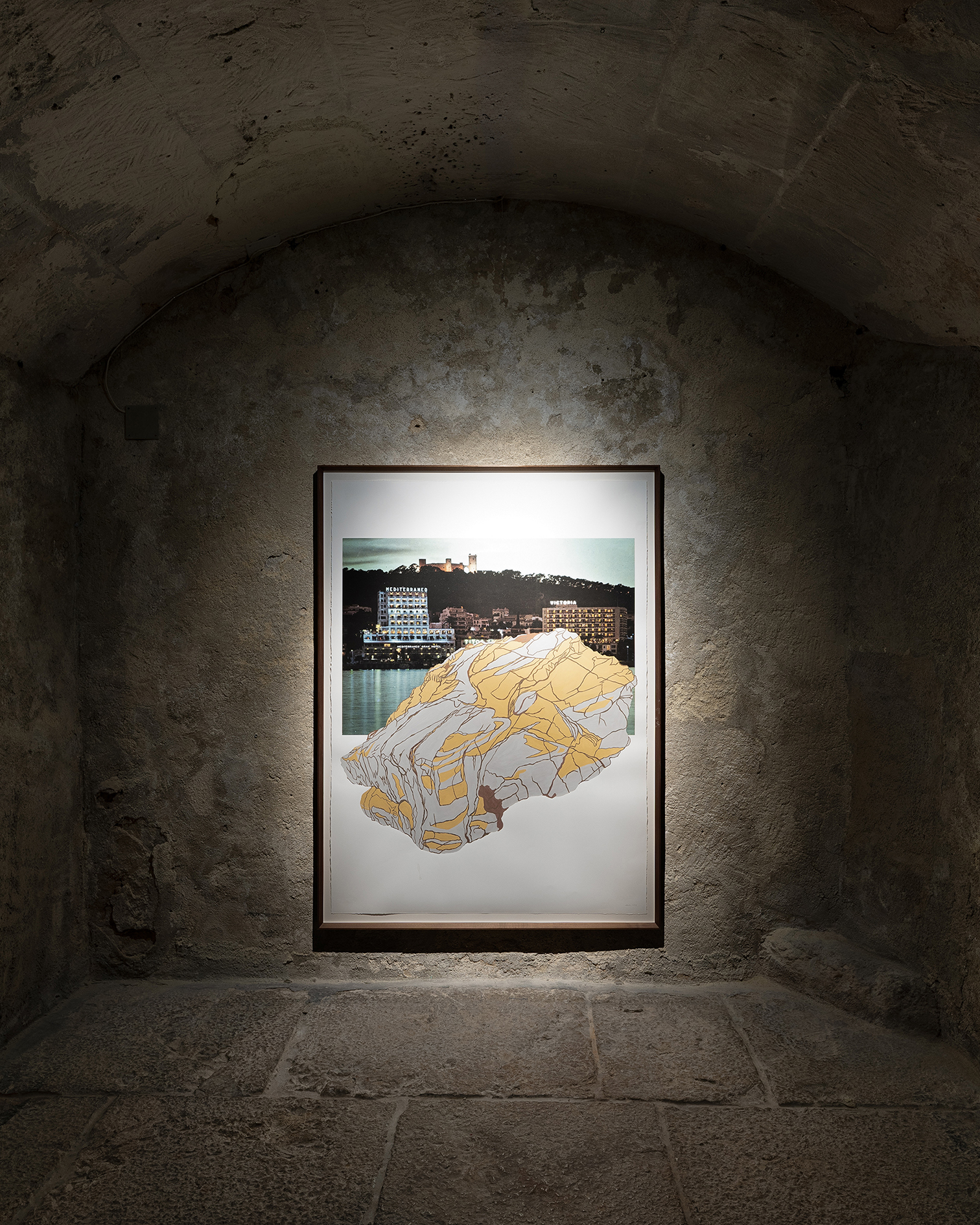
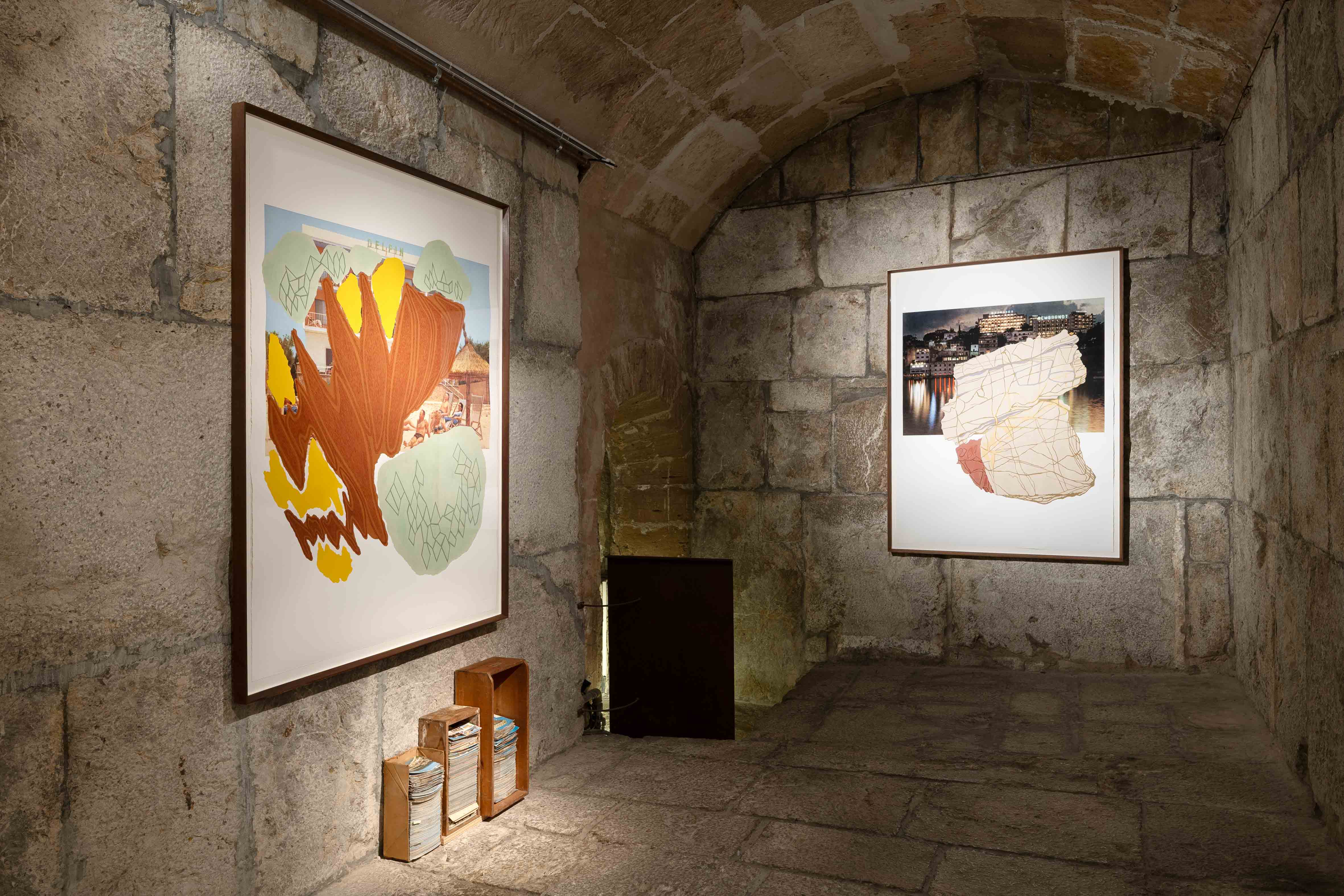
After immersing herself in the vast Casa Planas archive—which contains more than three million photographs from the tourist era in the Balearic Islands—Clara Carvajal presents, together with the Casa Planas Foundation, a dialogic reflection on the traces that the phenomenon of mass tourism may have left on the geological foundation of the north coast of Mallorca. These rock formations date back 290 million years and, until they were compelled to be conceived as settings for the aforementioned phenomenon, had only been affected by human activity through their use as tools for sharpening knives and other cutting implements (hence the title of Carvajal’s works).
The exhibition is conceived as a device that reproduces the physical and organic environment of the archive itself—largely unknown to the general public—within which the artist finds the raw material to develop her artistic approach. Thus, Casa Planas is reaffirmed as a multidisciplinary laboratory of creation, and Clara Carvajal transfers to her selection of reproduced photographs from the paper archive her reflection on the overlapping of actions over time, as well as on the predominance of the original magmatic rock over the incidental occurrences that the minor history of humankind has brought about like particles of dust in the wind.
Casa Planas is a relational and collective artistic project initiated in 2015 by researcher and visual artist Marina Planas, based on the aforementioned vast archive, considered the most important one dedicated to the development of mass tourism and imagery. Today, it is conceived as a space for contemporary thought and reflection on the history of the Balearic Islands.
The exhibition Ways of Fixing Time thus proposes a dual, dialogic journey that, starting from a kind of essential staging of the archive and its multiple lines of expansion, allows access—through an appropriate perspective—to Clara Carvajal’s plastic and conceptual exploration. She approaches the phenomenon of tourism from a geological viewpoint that transcends what the human measure of time can represent, both in terms of trace and in relation to the dichotomy of immanence and transcendence.
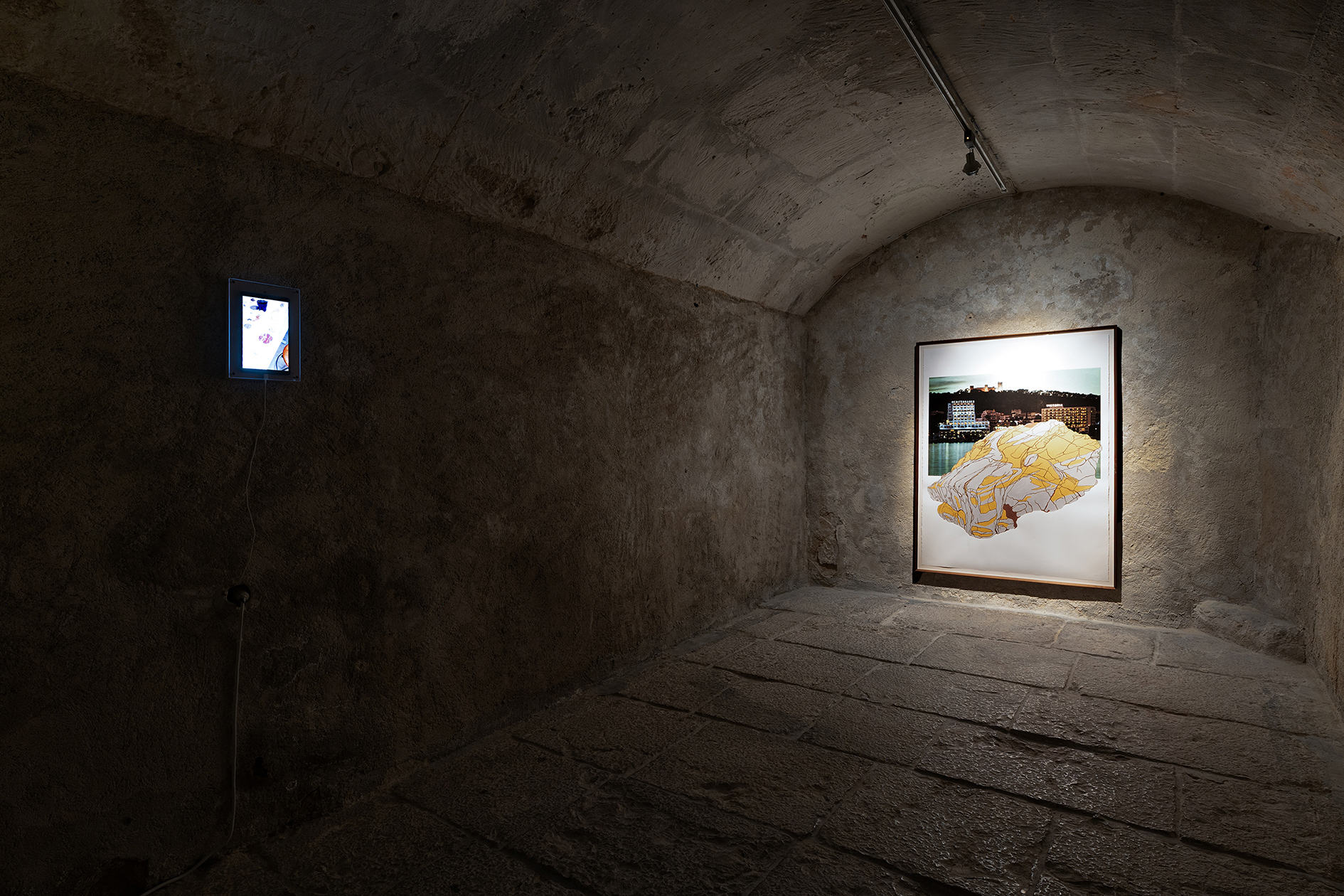
In this way, on the ground floor of Casal Solleric, in the so-called Espai Amable, a small arsenal from the archive has been displayed, including an introductory video, image filing cabinets, photographic devices, and more.
Clara Carvajal’s intervention takes place mainly in the Aljibe space and focuses on what we might call a stony gaze, which enables reflection on the similarities between photography and rock geology in their relationship to time—specifically, in her case, the rocks of the north coast of Mallorca, near where the artist resides and works for long periods each year. In this sense, one may consider the dissolution of the concept of time at the precise magmatic moment when stone consolidates into its form. From the moment the stone is, time is no longer for it. And photography incurs in that very same purpose: it exists only in the eternal instant it manifests, with the audacity of something that believes itself to have no end. Of course, a stone, like a photograph, may age—but only in our gaze, which is inoculated with time. In their essence, both stone and photograph are free from such concerns. Their time is fixed; it does not pass.
Ways of Fixing Time offers an initial approach to a language that knows only nouns (for it exists outside time, the domain of the verbal), and asks whether tourism has been yet another tensile force exerted upon stones, or whether it will dissolve like a rainbow in the abyssal mirror of what proves insignificant to those who inhabit the realm of eternity.
The gouache technique applied over printed images from the Casa Planas archive—used by Clara Carvajal throughout this series she has titled Pedres d’esmolar (Sharpening stones) proposes an unusual and even paradoxical modulation of the nearly lost culture of post- cards, now practically replaced by selfies, egotistical exercises that often prove almost insulting even to the stones in the background. The tension between geology and tourism—between that which is unaware of time (at least in the human sense) and that which dissolves in the irrelevant puddle of immediacy—is the focus of Carvajal’s reflection in this exhibition, Ways of Fixing Time, which, curiously, opens on March 21, 2026—a fact that is entirely irrelevant to stones, and even to archival images. For us, however, as viewers, there is no alternative but to accept the tyranny of the passage of time, the irreversible succession of dates that will gradually bring us closer to that dust which may seem to arise from the sharpening of our bones, slowly leading us toward that ultimate matter of which stones are made.
Carlos Jover